First, The Fundamentals: Why Do Ad Networks Have Requirements?
Before we dive into the specifics, it’s crucial to understand why these requirements exist. An ad network is a two-sided marketplace. On one side, you have publishers (like you) who provide the "ad space" on their websites. On the other side, you have advertisers who want to place their ads in front of your audience.
The requirements are there to ensure quality for advertisers. Brands want their ads to appear on high-quality, brand-safe websites that have real, engaged human traffic. By setting minimums for traffic, content quality, and site history, networks protect their advertisers' investments, which in turn allows them to command higher ad rates and pay you more.
To navigate this world, you need to speak the language. Let's clarify two key terms.
Sessions vs. Pageviews: What Really Matters?
You'll see these two terms everywhere, and they are not interchangeable.
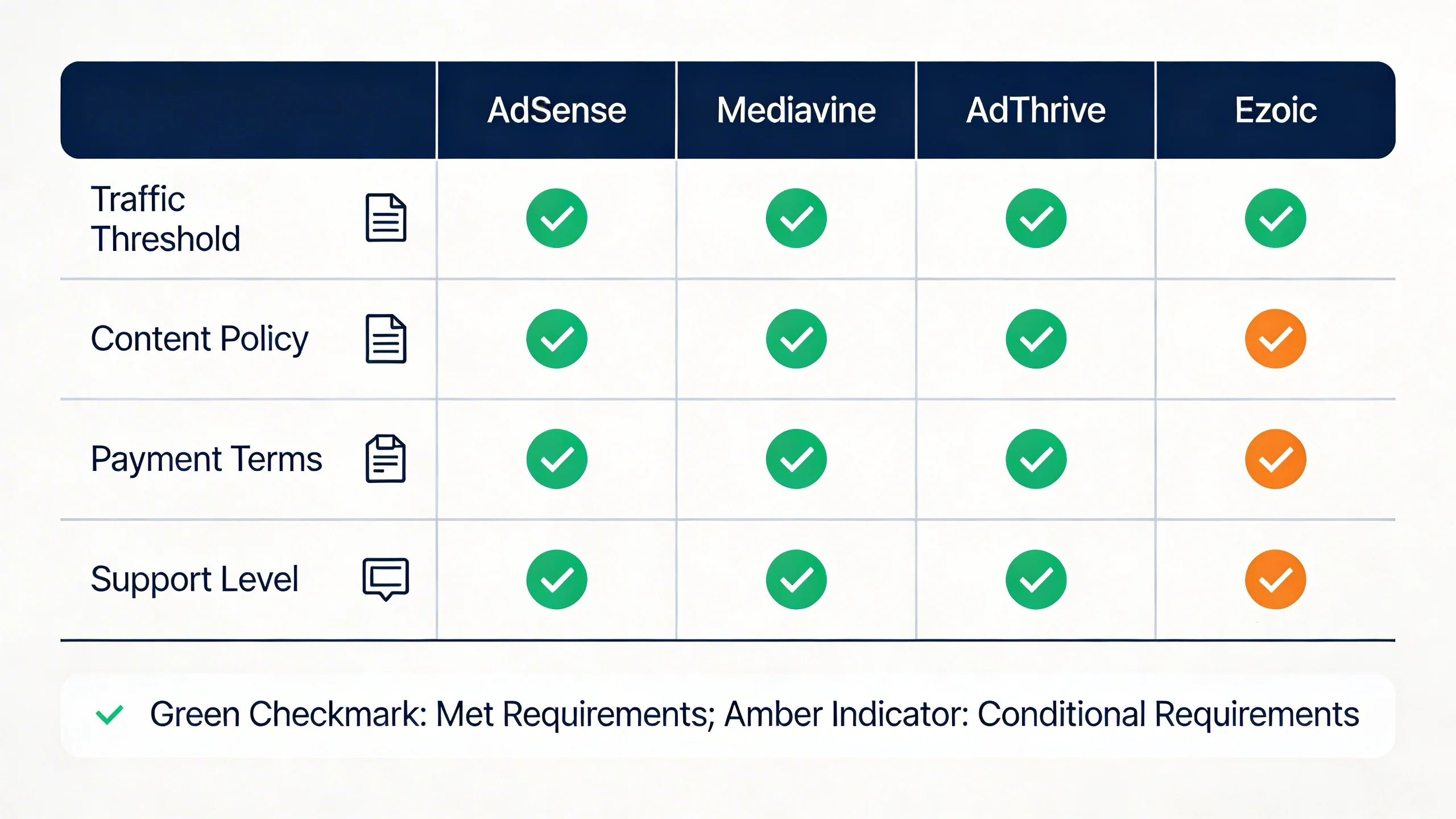
- Pageviews: A pageview is recorded every single time a page on your site is loaded by a browser. If one user visits your homepage, then clicks on three different articles, that counts as four pageviews.
- Sessions: A session is a single visit to your website by one user. In the example above, that user's entire visit—viewing the homepage and three articles—counts as just one session.
Most premium ad networks, like Mediavine, focus on sessions. Why? Because a session is a much better indicator of a unique, engaged user. It's a harder metric to inflate and shows that you have a loyal audience returning to your site. The industry-standard tool for measuring this is Google Analytics, and it's the source of truth for all major networks.
Understanding RPM and Why It's Your Most Important Metric
RPM stands for Revenue Per Mille, which is Latin for 1,000. It’s the estimated revenue you earn for every 1,000 ad impressions on your website. While you’ll see other metrics like CPM (Cost Per Mille), RPM is the ultimate measure of how effectively your site is monetizing its traffic. A higher RPM means you are earning more money from the same amount of traffic. The goal of moving up the ad network ladder is to partner with a network that can deliver the highest possible RPM for your site.
Tier 1: The Starting Point - Getting Your First Ad Dollar
For new sites, the goal is simply to get approved and start generating revenue, no matter how small. These networks have low or no traffic minimums and are designed to be a publisher's first step into monetization.
Google AdSense: The Gateway to Monetization
Overview: Run by Google, AdSense is the most well-known ad network on the planet. It’s the default starting point for millions of websites and the foundational program that almost every other network builds upon.
Key Requirements:
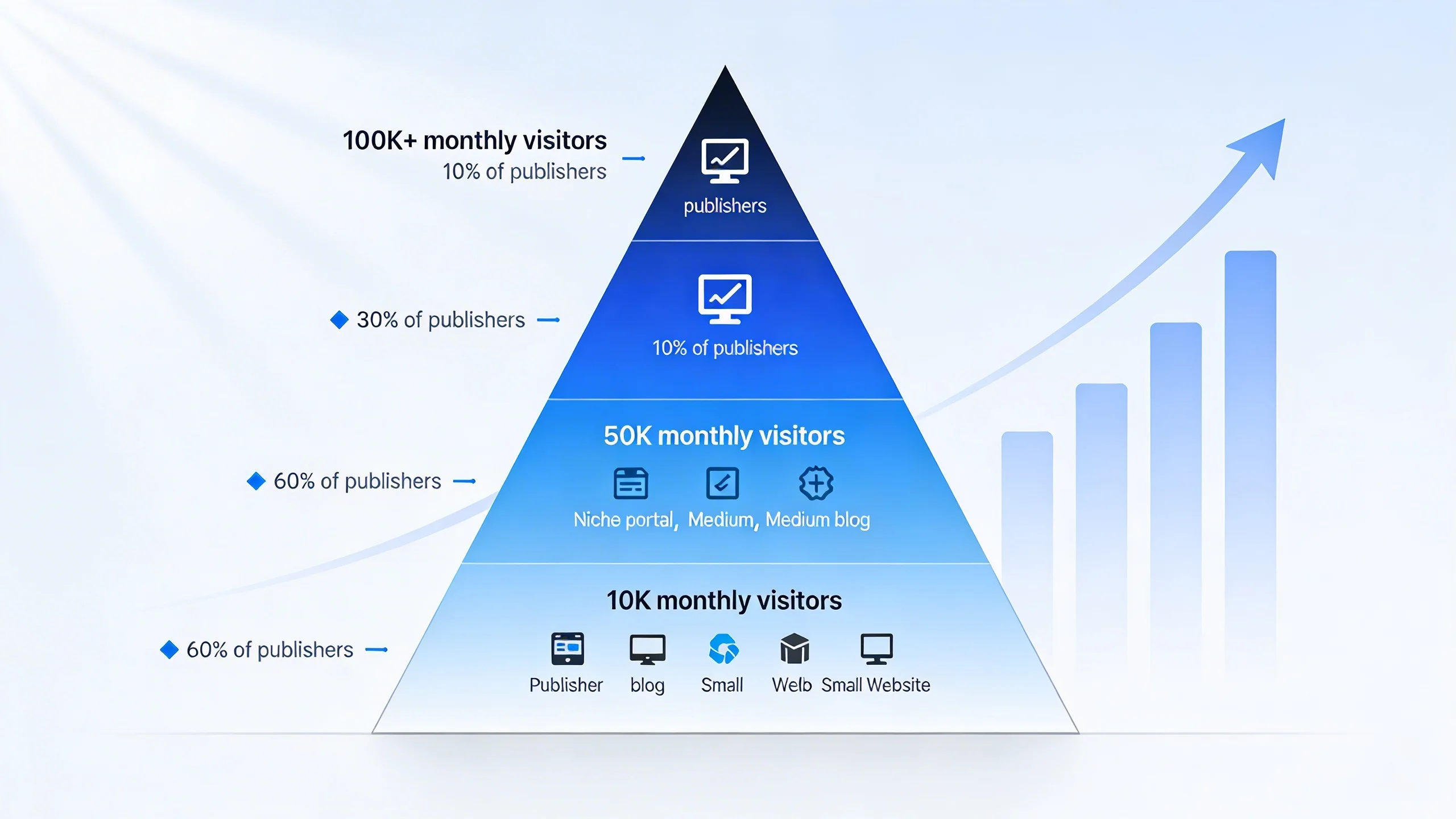
- Traffic: There is no official traffic minimum, but you need to have some consistent traffic for the review team to evaluate your site.
- Content: You must have unique, high-quality content. Your site needs essential pages like an About, Contact, and a Privacy Policy. A good rule of thumb is to have at least 15-30 substantial articles and for your site to be at least a few months old.
- Niche Restrictions: AdSense is extremely strict about its prohibited content policies. Niches related to adult content, gambling, illegal drugs, weapons, and other sensitive topics will be rejected.
- Technical: Your site must have a clean, easily navigable structure.
Pros: Easy to join, universally recognized, and a simple way to get started.
Cons: RPMs are generally the lowest in the industry, support is minimal, and accounts can be suspended for policy violations with little warning.
Best For: Brand new bloggers and website owners who want to start monetizing as soon as possible.
Tier 2: The Growth Engine - Moving Beyond the Basics
Once you've established your site and built a steady stream of traffic, it's time to move beyond AdSense. The networks in this tier offer better performance and more features, serving as a crucial stepping stone to the premium players.
Ezoic: The AI-Powered Contender
Overview: Ezoic is a Google Certified Publishing Partner that uses artificial intelligence to test thousands of ad combinations (sizes, locations, types) to find the highest-earning setup for your specific site and audience. It's known for its incredibly detailed analytics.
Key Requirements:
- Traffic: Ezoic previously had a 10,000 monthly visit requirement, but they now have an "Access Now" program with no traffic minimum. However, the platform's AI performs best with more data, so performance improves significantly with higher traffic.
- Content: Your site must be AdSense compliant, as Ezoic uses Google's ad exchange. Original, valuable content is a must.
- Technical: Integration typically happens via nameservers (pointing your domain to Ezoic) or a WordPress plugin. This can be a technical hurdle for some beginners.
Pros: Advanced A/I testing for revenue optimization, powerful Big Data Analytics, a site speed tool (Leap), and no traffic minimum for their entry-level program.
Cons: The setup can be technical, the dashboard can feel overwhelming for new users, and it can slow down your site if not configured properly.
Best For: Data-driven publishers who want to squeeze every drop of revenue from their traffic and are comfortable with a more hands-on, technical setup.
Monumetric: A Hands-On Approach
Overview: Monumetric is a publisher-focused ad management partner that prides itself on its hands-on support. They offer four tiered programs (Propel, Ascend, Stratos, and Apollo) that allow publishers to grow with the company as their traffic increases.
Key Requirements (for the Propel Program):
- Traffic: 10,000 monthly pageviews. Note that this is pageviews, not sessions, making it a slightly lower bar to clear than some competitors.
- Content: A high-quality site that can be approved by their ad partners. They have a strong preference for sites built on WordPress.
- Technical: You must have space for a minimum of 6 ad slots on your site. For sites with under 80,000 pageviews, there is a one-time $99 implementation fee.
Pros: Good publisher support, solid RPMs that are a clear step up from AdSense, and multiple programs to grow into.
Cons: The $99 setup fee can be a barrier for bloggers on a tight budget.
Best For: Bloggers who have crossed the 10k+ pageview threshold and want a more managed ad experience than AdSense without the complexity of Ezoic.
Tier 3: The Premium Players - Maximizing Your Revenue
This is the goal. For most serious digital publishers, getting into a premium ad network is a major milestone. These companies offer a full-service ad management partnership, delivering advanced technology, dedicated support, and significantly higher RPMs than lower tiers.
Mediavine: The Blogger Favorite
Overview: Mediavine is a full-service ad management company that has built a loyal community. They are known for their strong publisher support, their focus on site speed and user experience, and their commitment to building sustainable businesses for content creators.
Key Requirements:
- Traffic: 50,000 sessions within the last 30 days, as measured by Google Analytics.
- Content: Original, engaging, long-form content is a must. They specialize in lifestyle and educational niches like food, travel, parenting, home, personal finance, and crafts.
- Audience: A significant portion of your traffic (typically >50%) must come from top-tier advertising countries like the United States, United Kingdom, Canada, Australia, or New Zealand.
- Standing: Your site must be in good standing with Google AdSense.
Pros: Strong RPMs, solid publisher support, a strong focus on site speed and Core Web Vitals, and exclusive publisher tools like Grow.
Cons: The requirements are strict, and the application process can be lengthy and competitive.
Best For: Established bloggers in lifestyle niches who have met the traffic threshold and are looking for a true ad management partner.
Raptive (Formerly AdThrive): The Powerhouse
Overview: As the other major player in the premium space, Raptive (which rebranded from AdThrive in 2023) is an ad management powerhouse. They are known for their cutting-edge ad technology, data-driven approach, and access to high-paying campaigns from premium advertisers.
Key Requirements:
- Traffic: 100,000 monthly pageviews, as measured by Google Analytics.
- Content: The site must feature unique, original, and compelling content that is a great fit for their broad base of advertisers.
- Audience: The majority of traffic must come from the United States.
- Technical: Your site must be secure (HTTPS).
Pros: Strong RPMs, access to robust ad technology, and a dedicated support team for every publisher.
Cons: The high traffic requirement makes it the most difficult network to join.
Best For: High-traffic websites and established digital publishing businesses that are focused on maximizing their ad revenue above all else.
(imc.ad): The Top-Performing Premium Partner
Overview: IMC is a full-service premium ad management partner built for established, high-traffic publishers. They combine advanced data-driven optimization with dedicated white-glove service, delivering top-tier performance across both display banners and video ads (instream and outstream). IMC is known for offering the best revenue share and fastest payment terms in the premium ad space.
Key Requirements:
- Traffic: 250,000 monthly pageviews, as measured by Google Analytics.
- Content: High-quality, original content with a professional site design. Brand safety is a priority.
- Audience: Traffic from top-tier advertising countries is preferred.
- Technical: Your site must be secure (HTTPS) with a clean, navigable structure.
Pros: 90/10 revenue share (90% to publisher — the best available), NET 30 payment terms (fastest in the premium space), $40-$50 RPMs, fast 3-7 day approval, dedicated account manager from day one, top-tier performance across display and video formats.
Cons: The 250K pageview minimum means this is exclusively for established, high-traffic publishers.
Best For: Established publishers with 250K+ monthly pageviews who want the highest RPMs, best revenue share, fastest payments, and a dedicated ad management partner.
Comparison at a Glance: Which Ad Network is Right for You?
Choosing the "best" ad network depends entirely on your website's current stage of growth. What's perfect for a site with 10,000 pageviews is not the right fit for one with 200,000. Use this table as a quick reference to find your place on the monetization ladder.
| Network | Minimum Traffic | Metric Used | Best For | Key Feature |
|---|---|---|---|---|
| Google AdSense | None (practically) | N/A | New Websites | Easy Entry |
| Ezoic | None (Access Now) | Visits | Data-Lovers | AI Optimization |
| Monumetric | 10,000 | Pageviews | Growing Blogs | Tiered Programs |
| Mediavine | 50,000 | Sessions | Lifestyle Niches | Publisher Support |
| Raptive (AdThrive) | 100,000 | Pageviews | High-Traffic Sites | Strong RPMs |
| IMC (imc.ad) | 250,000 | Pageviews | Established Publishers | 90/10 Rev Share, NET 30, $40-$50 RPM |
Beyond the Numbers: How to Prepare Your Site for Approval
Simply hitting the traffic numbers isn't always enough. Premium networks are looking for high-quality partners. To give your site the best possible chance of acceptance, follow this pre-application checklist.
A Pre-Application Checklist:
- Install Google Analytics: This is non-negotiable. It is the industry standard for traffic verification, and every network on this list (besides AdSense) will require access to your data.
- Focus on Content Quality: Your top priority should always be creating long-form, original, and genuinely helpful content for your readers. Thin, spun, or low-value articles are a major red flag.
- Create Essential Pages: Ensure your site has a professional and easily accessible About page, a Contact page, and a comprehensive Privacy Policy page. This builds trust with both users and ad networks.
- Clean Up Your Site Design: A professional theme with clear navigation creates a positive user experience. Avoid a cluttered sidebar, distracting pop-ups, and an unprofessional look and feel.
- Optimize for Site Speed: A fast-loading website is crucial. Work on your Core Web Vitals. Networks like Mediavine place a heavy emphasis on site speed, as faster sites lead to better ad performance and higher revenue.
- Know Your Audience: Pay close attention to your traffic demographics in Google Analytics. Understand where your users are coming from, as most premium networks have a strong preference for US-based traffic.
Conclusion: Your Monetization Roadmap
Website monetization is a journey, not a destination. It’s a ladder you climb one rung at a time. Start where you qualify, whether that’s with AdSense or Monumetric. From there, your mission is clear: focus on creating exceptional content that grows your traffic and serves your audience. As your site grows, you can "level up" to the next tier, unlocking higher earnings and better partnerships along the way.
Which ad network are you currently using or aiming for? Share your goals and questions in the comments below