
The Monetization Squeeze: Why Traditional Ad Formats Are No Longer Enough
The challenges facing publishers are not theoretical; they are daily realities impacting revenue and growth. The old playbook of adding more banner spots to a page is a strategy of diminishing returns, actively working against both user satisfaction and advertiser goals.
The Pervasive Problem of Banner Blindness
Banner blindness is a learned behavior where website visitors—consciously or unconsciously—ignore information presented in banner-like locations. Decades of exposure to disruptive and irrelevant display ads have trained users to filter them out. The Nielsen Norman Group has reported on this phenomenon for years, noting that users fixate on the main content of a page and rarely look at the "periphery" where ads traditionally live.
This behavior has a direct financial consequence: wasted impressions. When users don't see an ad, they can't engage with it, leading to plummeting click-through rates and, ultimately, lower CPMs. Your ad inventory becomes less valuable to advertisers, and your revenue potential stagnates.
The High Cost of Intrusive Ads on User Experience (UX)
In an attempt to combat banner blindness, some publishers turn to more aggressive formats like interstitials, pop-ups, and auto-playing videos with sound. While these may grab attention, they do so at a steep cost. A poor ad experience is a leading cause of high bounce rates, low time-on-page, and the widespread adoption of ad blockers, which now rob publishers of billions in revenue annually.
Furthermore, these heavy, intrusive ads can severely impact site performance. Google has made it clear that user experience is a critical ranking factor through its Core Web Vitals (CWV) initiative. Ads that cause layout shifts (Cumulative Layout Shift) or slow down page load times (Largest Contentful Paint) can directly harm your SEO performance, reducing the very traffic you're trying to monetize.
The Cookieless Future is Here: The End of Third-Party Targeting
For years, digital advertising has relied on third-party cookies to track users across the web and serve them behaviorally targeted ads. That era is ending. With browsers like Safari and Firefox already blocking these cookies and Google Chrome phasing them out, the ability to target users based on their past browsing history is rapidly disappearing.
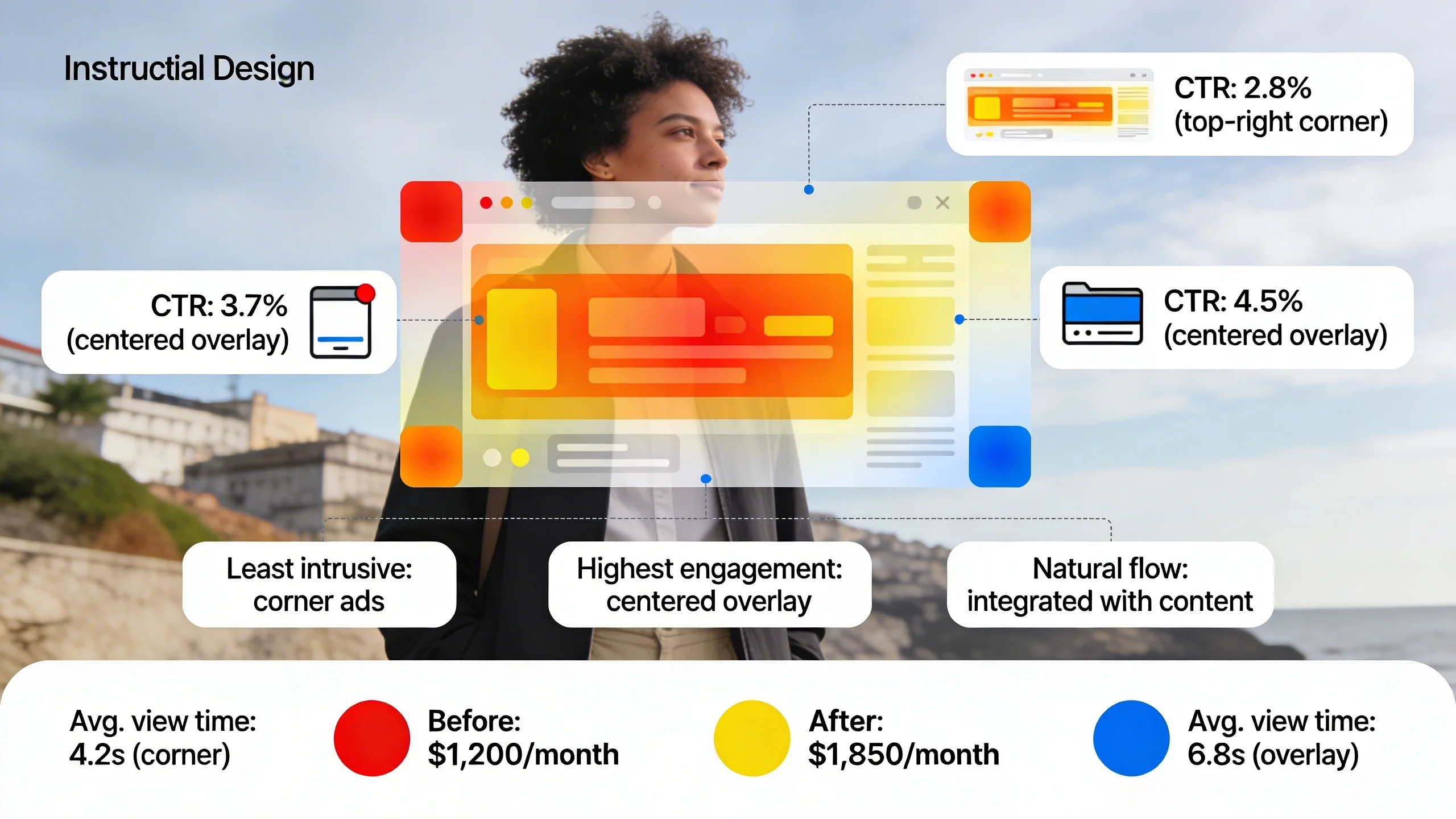
This shift makes traditional behavioral targeting far less effective and forces a pivot across the industry. Publishers and advertisers are now seeking cookieless advertising solutions that respect user privacy while still delivering relevance and performance. This new landscape requires a new approach, and formats that don't rely on third-party data are becoming the new gold standard.
Unlocking Hidden Value: What Are In-Image and In-Video Ads?
In-image and in-video ads are non-intrusive ad formats that leverage the most engaging content on your page—your visuals—to create new monetization opportunities. They work by using advanced contextual intelligence to understand your content and serve ads that are directly relevant to what the user is seeing in real-time.
Defining In-Image Advertising: Monetizing Your Visuals
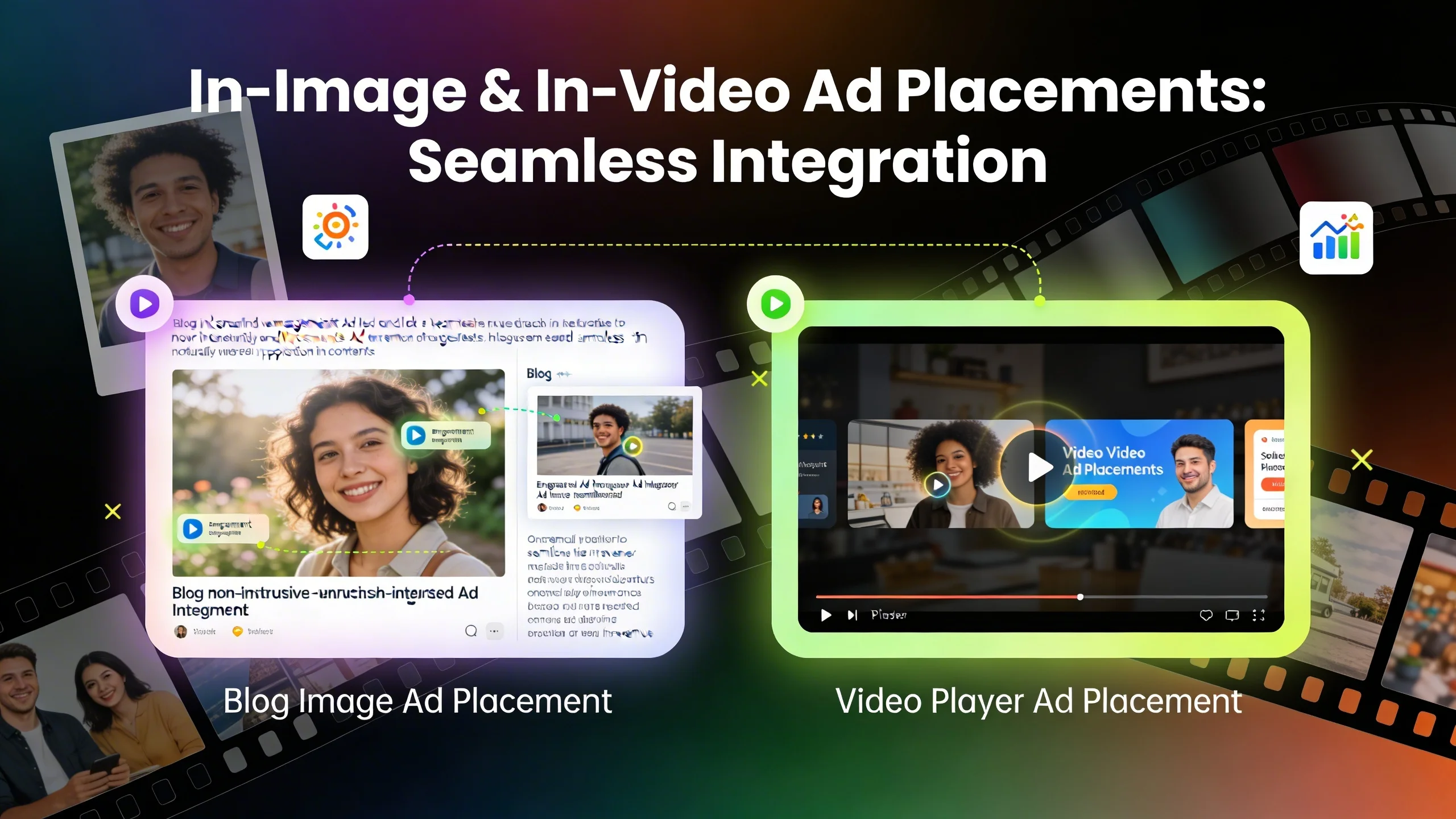
In-image advertising is the placement of contextually relevant, unobtrusive ads directly on or adjacent to a publisher's editorial images. Instead of being relegated to a sidebar, the ad becomes part of the visual content experience.
The technology behind it is sophisticated. A lightweight script uses AI-powered computer vision to analyze the contents of an image on your page—identifying objects, concepts, environments, and sentiments. This deep contextual understanding allows it to match the image with a highly relevant ad from a brand. For example, an image of a hiker on a mountain trail might be paired with an ad for hiking boots or an outdoor apparel brand.
(Visual Aid: A high-quality lifestyle blog image showing a sunny beach scene. A small, semi-transparent overlay appears in the bottom corner of the image with a tastefully designed ad for a luxury resort or a brand of sunscreen, complete with a logo and a "Learn More" button.)
The user experience is seamless. The ad often appears subtly as a user scrolls past or hovers over an image, catching their attention without disrupting their reading flow. This form of image monetization transforms static pictures into dynamic, revenue-generating assets.
Defining In-Video Advertising: Engaging Without Interruption
It's crucial to distinguish modern in-video ads from the disruptive pre-roll or mid-roll ads that force users to wait. True in-video advertising consists of formats that play within the content stream or overlay on the publisher's own editorial video content in a non-interruptive manner.
Common formats include:
- In-Content Outstream: A video ad unit that appears within the body of an article. It loads and plays (typically muted) only when it is in view as the user scrolls, and it pauses or disappears when scrolled out of view.
- Contextual Overlays: Similar to in-image ads, these are small, often transparent ad units that overlay a portion of the publisher’s video player while the content is playing, offering a relevant product or service without stopping the video.
(Visual Aid: A screenshot of a news article on a tablet. As the user scrolls down, a video player embedded between two paragraphs comes into view and begins to auto-play silently. The video ad is for a high-end automotive brand, matching the article's theme of technology and innovation.)
These formats are designed to be user-friendly. They don't hijack the screen or force a user to watch. By being user-initiated (through scrolling) or contextually integrated, they offer a far more positive experience, making them a powerful tool for video monetization without alienating your audience.
The Core Benefits: Why Top Publishers Are Adopting These Formats
The shift toward in-image and in-video advertising is driven by a powerful combination of financial, user experience, and future-proofing benefits. Top-tier publishers are embracing these formats because they solve multiple problems at once.
Benefit 1: Generate True Incremental Revenue
This is the most compelling advantage. In-image and in-video ads create net-new ad inventory on your site. They don't replace or compete with your existing IAB standard banner units; they add an entirely new layer of monetization on top of what you already have.
Think of it like this: your website is a building, and your standard ad slots are the rentable floors. In-image and in-video ads are like discovering a new, highly profitable floor in your existing building that you never knew you had. Because this inventory is brand new, the revenue it generates is purely incremental revenue for publishers. Furthermore, due to their high viewability and deep contextual relevance, these formats often command premium CPMs from advertisers seeking engaged audiences in brand-safe environments.
Benefit 2: Enhance, Not Harm, the User Experience
Unlike intrusive ads that fight for the user's attention, these formats are designed to complement the content. They are inherently less disruptive for two key reasons:
- Placement: They appear where the user's focus is already directed—on the compelling images and videos that enrich your articles.
- Relevance: Because the ads are contextually aligned with the visual content, they feel less like a random interruption and more like a helpful, relevant suggestion. An ad for a kitchen appliance next to a recipe photo feels natural and additive, not jarring.
This synergy creates a better, more cohesive experience, keeping users on the page longer and encouraging repeat visits.
Benefit 3: Future-Proof Your Revenue with Contextual Targeting
As third-party cookies disappear, contextual targeting is re-emerging as the premier strategy for reaching relevant audiences in a privacy-compliant way. In-image and in-video ads are natively contextual. Their targeting is based entirely on the content of the page—the words, the image pixels, the video frames—not on personally identifiable user data.
This approach offers a dual benefit. First, it ensures your monetization strategy is durable and prepared for the cookieless future. Second, it provides a powerful brand safety guarantee for advertisers. A brand can be confident that its ads will only appear next to content that is relevant and appropriate, protecting its reputation and improving campaign performance.
Benefit 4: Achieve Superior Viewability and Engagement
Viewability—the measure of whether an ad had the opportunity to be seen—is a critical metric for advertisers. Standard banner ads, especially those at the bottom of the page, often suffer from low viewability rates.
In-content formats flip this dynamic. By placing ads directly within the editorial content that users are actively consuming, they naturally achieve exceptionally high viewability. As cited by the IAB, ads placed within the content stream command greater user attention. When an ad is where the eyes are, engagement follows. This superior performance makes your inventory more attractive and valuable to premium advertisers.
A Practical Implementation Guide for Publishers
Adopting in-image and in-video advertising is straightforward with the right approach and technology partner. The goal is to seamlessly integrate these formats into your existing ad stack to maximize yield without disrupting your operations or user experience.
How to Choose the Right Monetization Partner
Selecting a partner is the most critical step. Not all technologies are created equal. Look for a partner that excels in these key areas:
- Advanced Contextual Tech: Do they use proprietary AI and computer vision for deep, accurate analysis of your visual content? Generic keyword matching isn't enough. True contextual intelligence ensures the highest ad relevance and robust brand safety.
- Diverse Demand Sources: A great partner provides access to premium advertisers and major Demand-Side Platforms (DSPs). This ensures competitive bidding for your new inventory, maximizing your CPMs and fill rates.
- Lightweight Technology: Your partner’s script must be asynchronous and optimized for speed. Ask potential partners for case studies on their impact on Core Web Vitals. The goal is to add revenue with zero negative impact on site performance.
- Transparent Reporting: You need a clear, intuitive dashboard to track performance. Look for a platform that provides granular reporting on revenue, CPMs, viewability, and other key metrics, allowing you to understand the true value being delivered.
- Dedicated Support: The best partners act as an extension of your ad ops team. They should provide expert support during setup, ongoing optimization advice, and proactive strategies to help you grow your revenue.
Best Practices for Placement and Optimization
Once you have a partner, follow these best practices to achieve the best results:
- In-Image: These formats perform best on high-quality, original editorial images within the body of an article. They are less effective on small thumbnails, busy photo galleries, or stock-heavy product grids. Focus on your most visually engaging content.
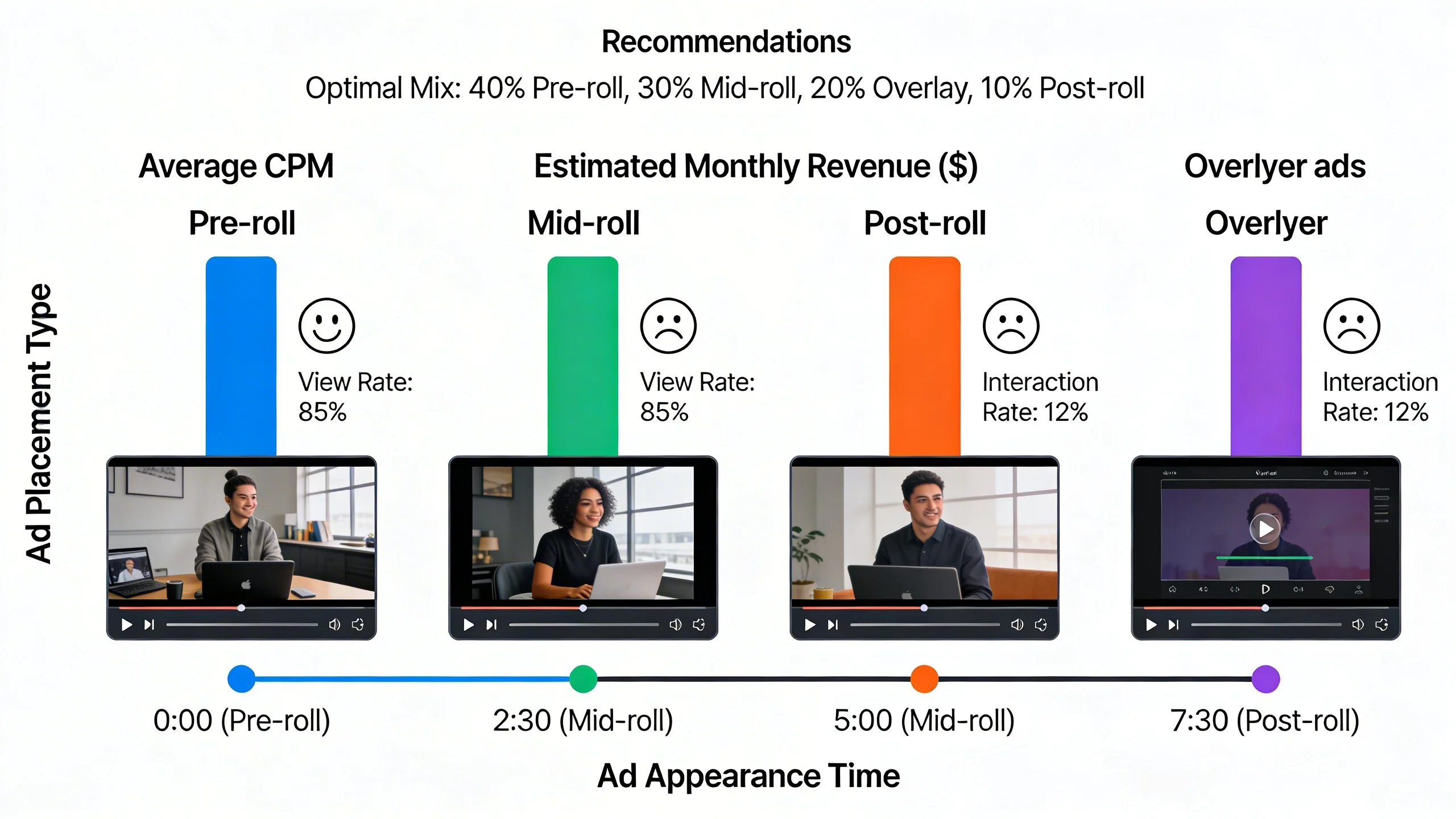
- In-Video: These are ideal for publishers who produce their own video content and embed it within articles. Work with your partner to test different formats, like in-content outstream versus overlays, to see what drives the best view-through and completion rates for your audience.
- A/B Testing: Don't set it and forget it. A good monetization partner will help you A/B test different ad densities, formats, and placements. The goal is to find the optimal balance between maximizing RPM (Revenue Per Mille) and maintaining a pristine user experience.
Measuring Success Beyond the CPM
While CPM is an important metric, a holistic view is essential to understanding the full impact. Track these key performance indicators (KPIs):
- Overall Session RPM Lift: The ultimate measure of success is the increase in total revenue per thousand user sessions. This shows the true incremental value being added.
- Viewability and VCR (Video Completion Rate): High scores here validate the quality of the ad placements and prove to advertisers that their messages are being seen.
- User Engagement Metrics: Keep an eye on your analytics for time-on-page and bounce rate. When implemented correctly, these ad formats should have a neutral or even positive impact as they are part of an engaging content experience.
Frequently Asked Questions (FAQ)
Question 1: Will these ads slow down my website?
Answer: Reputable partners are laser-focused on performance. They use asynchronous, lightweight JavaScript code that loads independently of your page content. This is specifically designed to have a minimal impact on page load times and your Core Web Vitals scores.
Question 2: Do I lose control over the ads shown on my site?
Answer: Absolutely not. Leading platforms provide publishers with robust brand safety controls. You should have the ability to block specific advertiser categories (e.g., gambling, politics), IAB categories, and even individual domains to ensure the ads align perfectly with your brand standards.
Question 3: How do in-image/in-video ads work with my existing ad stack (like Google Ad Manager and Header Bidding)?
Answer: They are designed to be complementary. These formats typically operate independently of your standard display auctions. They integrate easily with a single tag and work alongside your existing setup, including Google Ad Manager (AdX) and pre-bid header bidding wrappers, to add a new layer of revenue without creating conflicts.
Question 4: What kind of content works best for these ad formats?
Answer: Any content that is rich with high-quality images and video is an ideal candidate. This includes verticals like lifestyle, news, entertainment, sports, travel, food, and automotive. The more engaging your visual content, the more effective these ad formats will be.
(Conclusion & CTA)
The digital advertising landscape is undergoing a fundamental transformation. The pressures of banner blindness, user experience demands, and the end of third-party cookies are forcing publishers to innovate. Simply doing more of the same is no longer a viable strategy for growth.
Publishers who thrive in this new era will be those who embrace intelligent, user-friendly monetization solutions. In-image and in-video advertising is a proven strategy to unlock significant incremental revenue from your most valuable assets, future-proof your business against market shifts, and even enhance the user experience by delivering relevant, seamless ads.
Ready to see what your content is really worth? The images and videos on your site are untapped revenue streams waiting to be activated.
[Button/Link: Request a Free Revenue Potential Audit]
Our team will analyze your site and provide a custom projection of the incremental revenue you could be earning. No commitment required.